
What this is
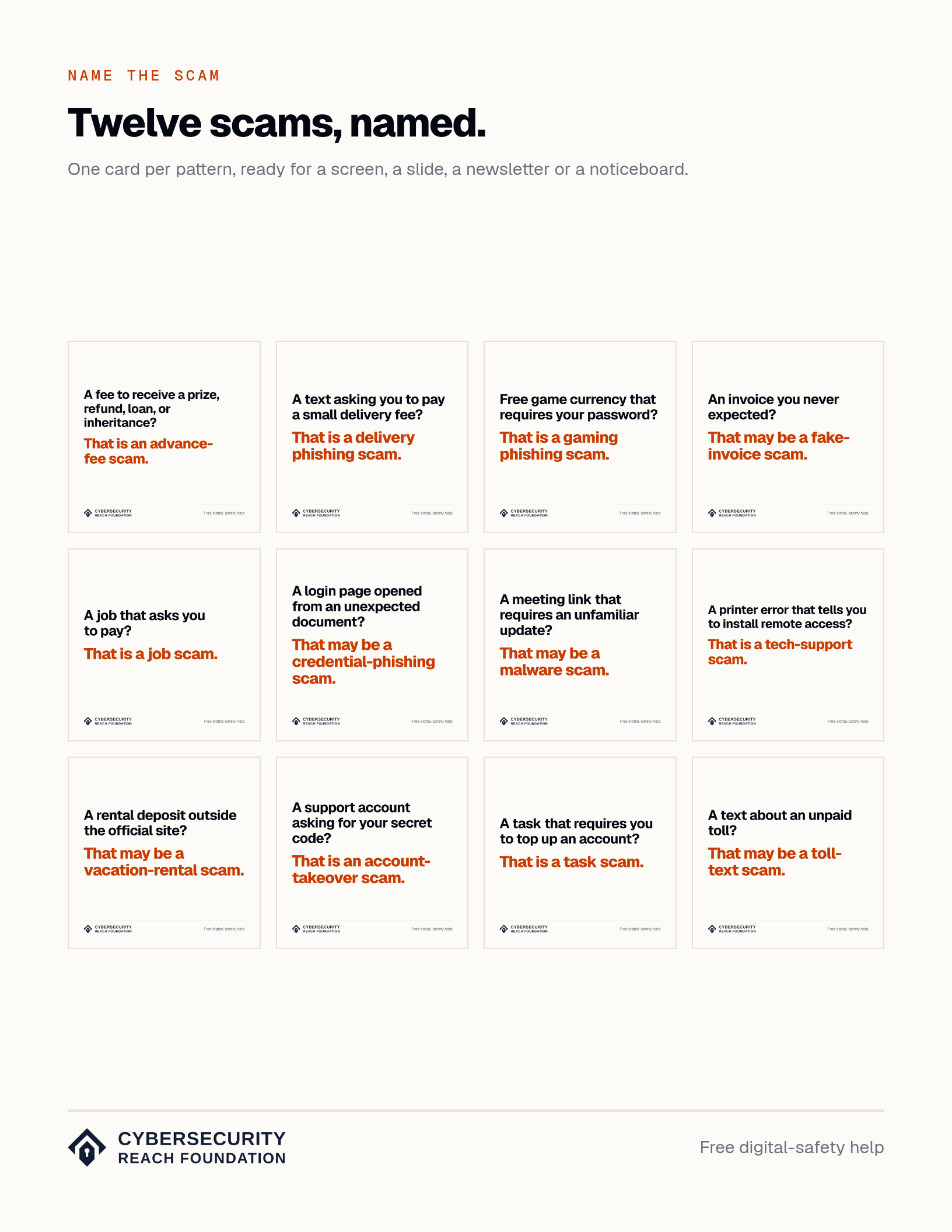
Twelve cards, one for each scam pattern people meet most often. Each card shows what someone sees and names the scam. Nothing else.
What is inside
- Fake delivery fee
- Fake toll text
- Fake job asking for payment
- Fake task withdrawal
- Fake support asking for a code
- Fake login page
- Fake invoice
- Fake refund or prize fee
- Fake meeting update
- Fake remote support
- Fake rental deposit
- Fake game reward
How to use them
- Print one and put it on a noticeboard or a waiting-room wall.
- Show one at the start of a session and ask the room to name it before you turn the page.
- Put one in a newsletter. One card does more than a list of ten warnings.
- Run them on a screen, one at a time, rotating weekly.
One card at a time
These work because they ask one question and give one answer. Showing several at once turns recognition back into a list to memorise. Pick the pattern your community is seeing and use that one.
Wording you can rely on
A card says “that is” only where the pattern is recognisable on its own. Where the sign alone does not settle it, the card says “that may be”. Five of the twelve are written that way on purpose. Please keep the wording as it is if you reproduce them.